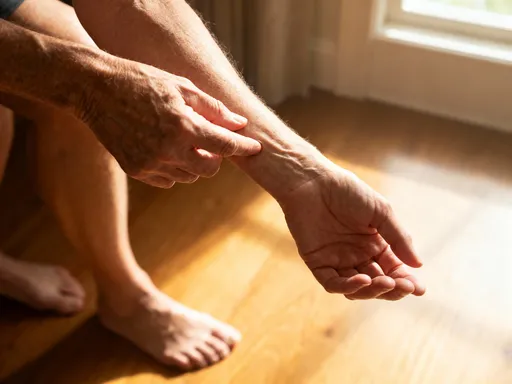
How I Rediscovered Strength Through Qigong After Injury
After my recovery stalled, I turned to traditional Chinese medicine and discovered qigong—not as a quick fix, but as a steady path to healing. What started as gentle movement became a daily ritual that rebuilt my energy, focus, and physical resilience. This is how a systematic qigong practice quietly transformed my rehabilitation journey, one breath at a time.
The Plateau That Changed Everything
Recovery after injury is rarely a straight line. For months, I followed every recommendation—physical therapy sessions, prescribed exercises, rest, and even dietary adjustments—but progress slowed to a crawl. The initial gains faded, replaced by persistent fatigue and discomfort that lingered just below the surface. Each day brought the same routine: stretches, resistance bands, and the quiet dread of measuring improvement that no longer seemed to come. Frustration settled in, subtle but heavy, like a weight I hadn’t asked to carry.
It wasn’t just the physical limitations that wore me down. The mental toll was just as real. I began to question whether full recovery was even possible. Would I always feel fragile? Would simple movements—lifting a grocery bag, bending to tie a shoe—remain a challenge? The emotional strain of uncertainty began to affect my sleep, my mood, and my sense of self. I had defined myself by my strength and independence, and now both felt out of reach. It was in that space of quiet desperation that I started looking beyond conventional rehabilitation.
I had heard whispers of qigong in passing—something about breath and energy, practiced by older adults in parks or as part of tai chi classes. At first, I dismissed it as too gentle, too abstract, to make a real difference. But as my progress stalled, curiosity outweighed skepticism. I began reading about traditional Chinese medicine and its holistic approach to healing, where the body, mind, and energy are seen as interconnected. That idea resonated. If my recovery had plateaued, perhaps I needed more than physical input. Maybe what I needed was a different kind of support—one that addressed not just the injury, but the whole system around it.
What Is Qigong? More Than Just Movement
Qigong (pronounced “chee-gong”) is an ancient practice rooted in traditional Chinese healing systems, with a history spanning thousands of years. At its core, it is the cultivation of qi—the vital energy believed to flow through all living things. The word itself combines “qi” (energy) and “gong” (practice or skill), meaning “the practice of working with life energy.” But rather than a mystical concept, qigong is a practical, accessible system of coordinated movement, breath regulation, and focused intention.
Unlike high-intensity workouts or even standard physical therapy, qigong emphasizes slowness, awareness, and internal connection. Movements are gentle, often repetitive, and designed to open energy pathways, improve circulation, and calm the nervous system. It is not about building muscle or endurance in the conventional sense, but about restoring balance and resilience from within. Think of it as retraining the body to move with ease, not force.
One of the most common misconceptions is that qigong is simply a form of light exercise or meditation. In truth, it is both—and neither. It blends physical motion with mental focus and breath control in a way that creates a unique mind-body synergy. While a yoga class might stretch the muscles and a meditation session might quiet the mind, qigong does both simultaneously. It teaches you to move with awareness, to breathe with purpose, and to listen to your body’s subtle signals. This integration is what makes it particularly powerful during recovery, when the body needs not just repair, but reconnection.
Why the Body Needs Gentle Restoration
After injury, the instinct is often to push—to do more therapy, stretch further, strengthen harder. But the body doesn’t always respond well to constant stimulation. In fact, aggressive rehabilitation can sometimes lead to increased inflammation, muscle tension, and nervous system overload. When the body is stuck in a state of stress, healing slows. This is where gentle practices like qigong offer a different pathway—one that supports restoration without strain.
Research in mind-body medicine has shown that slow, rhythmic movements combined with deep breathing can activate the parasympathetic nervous system—the part responsible for rest and recovery. When this system is engaged, heart rate slows, blood pressure stabilizes, and the body shifts from “fight or flight” to “rest and digest.” This physiological shift creates the ideal internal environment for healing. Studies have linked regular qigong practice to reduced markers of inflammation, improved circulation, and enhanced pain modulation—key factors in long-term recovery, especially for soft tissue injuries and joint conditions.
Moreover, qigong helps retrain movement patterns that may have been disrupted by injury. When pain alters the way we move, we often develop compensatory habits—shifting weight, shortening strides, bracing muscles. Over time, these patterns become ingrained, even after the original injury has healed. Qigong’s slow, mindful motions allow the body to relearn natural alignment and fluidity, reducing strain on vulnerable areas. It’s not about correcting movement through force, but through awareness and repetition. This makes it especially valuable for those recovering from repetitive strain, surgery, or chronic pain conditions.
The emphasis on pacing is another critical benefit. Healing is not a race, yet modern rehabilitation often feels like one. Qigong teaches a different rhythm—one where consistency matters more than intensity. A ten-minute session done daily can be more effective than an hour-long workout done once a week, especially when the goal is nervous system regulation and sustainable progress.
Building a Systematic Practice: My 5-Step Approach
When I first started qigong, I approached it haphazardly—watching online videos, trying a few movements, then stopping when life got busy. It wasn’t until I created a simple, repeatable structure that I began to see real changes. Over time, I developed a five-step framework that became the foundation of my daily practice. It wasn’t complicated, but it was consistent—and that made all the difference.
The first step is **breath awareness**. Before any movement, I spend two to three minutes focusing on my breath. I inhale slowly through the nose, allowing the lower abdomen to rise, and exhale fully, releasing tension. This simple act signals to the body that it’s safe to relax, preparing the nervous system for the practice ahead. Breath is the anchor of qigong—it connects movement to intention and keeps the mind present.
The second step is **gentle warm-up movements**. These include shoulder rolls, neck stretches, and wrist circles—small motions that lubricate the joints and awaken the body’s awareness. I don’t rush through them. Each movement is done with attention, as if I’m reacquainting myself with parts of my body that had been neglected during recovery. This phase usually lasts five minutes and sets the tone for the rest of the session.
The third step is the core of the practice: **qigong forms**. I focus on two foundational exercises—“Lifting the Sky” and “Separating Heaven and Earth.” In “Lifting the Sky,” the arms rise slowly in front of the body, palms up, as if gathering energy from the ground and lifting it overhead. Then, with control, the hands descend, palms facing down, as if lowering energy back into the earth. This movement promotes spinal alignment, shoulder mobility, and a sense of upward lift. “Separating Heaven and Earth” involves one hand rising above the head while the other lowers toward the ground, creating a gentle stretch through the torso and a feeling of connection between the body and its surroundings.
The fourth step is **visualization**. As I move, I imagine energy flowing through my body—entering through the soles of the feet, rising up the legs, circulating through the core, and moving out through the fingertips. This isn’t about believing in invisible forces, but about using the mind to enhance focus and intention. Visualization strengthens the mind-body connection, making each movement more meaningful.
The final step is **cooldown and reflection**. I return to stillness, hands resting at the lower abdomen, and take a few slow breaths. I notice how my body feels—lighter? warmer? more centered? I don’t judge the experience. I simply observe. This closing moment helps integrate the practice and reinforces the habit of self-awareness.
What makes this system work is its simplicity and consistency. I don’t need special equipment or a lot of time. Ten to twenty minutes a day, done with attention, is enough. Over weeks and months, the cumulative effect is profound—increased stamina, reduced discomfort, and a growing sense of inner stability.
When Progress Isn’t Linear—And That’s Okay
One of the most valuable lessons qigong taught me is that healing doesn’t follow a predictable path. There were days when I felt stronger, more energized, more in tune with my body. And then there were days when even the simplest movements felt heavy, when my mind was restless, or when old aches flared up without warning. At first, these setbacks felt like failures. I would question whether I was doing it right, whether I was wasting my time.
But qigong doesn’t measure progress in milestones. It teaches presence. On difficult days, the practice became less about improvement and more about acceptance. Instead of pushing through discomfort, I learned to adjust—shortening the session, simplifying the movements, or simply standing and breathing. The goal wasn’t to achieve a perfect form, but to show up with kindness and attention.
This shift in mindset had a ripple effect. As I became more patient with my body, I also became more patient with myself. The frustration that once clouded my recovery began to lift. I stopped seeing slow progress as a sign of failure and started recognizing it as part of the process. Mindfulness, cultivated through qigong, helped me manage expectations and reduce the emotional burden of healing. I began to understand that resilience isn’t about never struggling—it’s about how you respond when you do.
Over time, I noticed that even on “off” days, the practice left me calmer, more grounded. The benefits weren’t always visible in physical changes, but in the quiet moments after—when my breathing was deeper, my thoughts clearer, my shoulders less tense. These subtle shifts added up, creating a foundation of stability that supported every aspect of my recovery.
Integrating Qigong with Conventional Rehab
It’s important to emphasize that qigong was never meant to replace medical care or physical therapy. Instead, it became a complementary practice—one that enhanced the work I was already doing. While physical therapy addressed structural alignment and strength, qigong supported nervous system regulation and internal awareness. Together, they created a more holistic approach to healing.
When I first mentioned qigong to my physical therapist, I was unsure how it would be received. To my relief, she was open-minded. She acknowledged that while she couldn’t prescribe qigong, she recognized the value of mind-body practices in recovery. She encouraged me to continue, as long as I didn’t neglect my prescribed exercises. This balanced approach—honoring both conventional and complementary methods—proved to be the most effective.
For anyone considering adding qigong to their recovery plan, communication with healthcare providers is key. It’s important to be transparent about what you’re doing, especially if you have specific medical conditions. A doctor or therapist can help determine whether certain movements are safe and how to integrate them without disrupting existing treatment. The goal isn’t to choose between systems, but to create synergy between them.
At the same time, caution is necessary. There are no miracle cures, and qigong is not a substitute for professional medical care. It works best when used as part of a broader, evidence-based recovery strategy. It supports healing—it doesn’t force it. This balanced perspective protects against the temptation to abandon proven treatments in favor of alternative methods, ensuring that recovery remains grounded in safety and science.
From Healing to Wholeness: A Lasting Shift
What began as a tool for recovery has become a lifelong practice. Even after my physical symptoms subsided, I continued with qigong—not because I had to, but because I wanted to. The benefits extended far beyond injury rehabilitation. My sleep improved. My ability to manage daily stress deepened. I became more attuned to my body’s signals—knowing when to rest, when to move, when to pause.
Perhaps the most profound change was in my mindset. I no longer measure my worth by productivity or physical performance. I’ve learned to value presence, patience, and self-compassion. Qigong didn’t just help me heal—it helped me grow. It taught me that strength isn’t just about power or endurance, but about resilience, awareness, and the courage to move slowly when the world demands speed.
Today, my practice looks different than it did in the beginning. Some days are longer, some are shorter. Some days I focus on deep breathing, others on fluid movement. But the commitment remains. It’s a quiet promise I make to myself each morning—a promise to listen, to honor my body, and to move with intention.
Healing is not a destination. It’s a continuous process of reconnection—between breath and body, effort and ease, struggle and acceptance. Qigong didn’t give me back what I lost. It gave me something new: a deeper understanding of what it means to be whole. And for that, I am grateful.